Tag: lighting

  • Kill the Big Light: A Better Way to Illuminate a Room

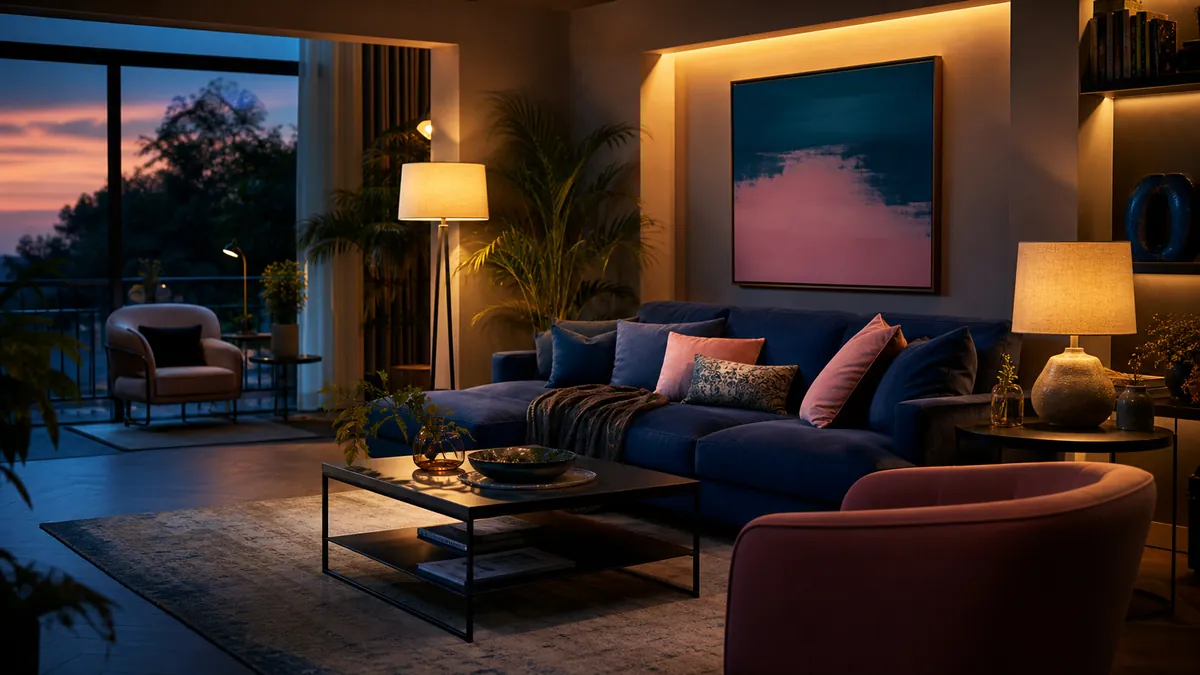
    A living room illuminated by layered floor, table and indirect lamps

    The ceiling light is efficient in the same way a supermarket is efficient: everything is visible, but almost nothing looks flattering. Homes need more than maximum illumination. They need pockets of light that support reading, cooking, conversation and the highly technical activity of doing absolutely nothing.

    Think in layers

    Ambient light establishes the room’s general brightness. Task light helps with a specific activity. Accent light gives depth to walls, objects and corners. A comfortable room usually combines all three at lower intensity instead of asking one fixture to perform every job.

    Light the edges

    Dark corners make a room feel smaller, while gently illuminated walls create depth. A floor lamp aimed toward a wall, a small lamp on a low cabinet or a shaded light near a corner can change the perceived size of the room without increasing overall brightness dramatically.

    Put light where life happens

    A reading chair needs a controllable lamp near shoulder height. A dining table benefits from a focused pendant that leaves the surrounding room softer. Kitchen worktops need direct, shadow-free light. Start with activities and positions before choosing fixtures.

    Control glare

    An exposed bright bulb at eye level is tiring even when the room looks atmospheric in photographs. Shades, diffusers and reflected light soften contrast. Sit in the places you actually use and check whether the source is visible. Good lighting should reveal the room, not interrogate its occupants.

    Choose warmth intentionally

    Warm light generally suits living areas, while neutral light can help in workspaces. Consistency within a sightline matters: wildly different color temperatures make adjoining areas feel accidental. Dimming is often more valuable than chasing a single perfect specification.

    Keep the big light for finding a lost earring. For living, build a small constellation instead.
  • Electric Orange, Perfect Angle: Living With the Louis Poulsen AJ Table

    Electric Orange, Perfect Angle: Living With the Louis Poulsen AJ Table

    Some lamps illuminate a room. The AJ Table lamp edits it. A sharp cone of light, one decisive diagonal and a colour that refuses to whisper: in Electric Orange, Arne Jacobsen’s familiar silhouette becomes less like an appliance and more like punctuation.

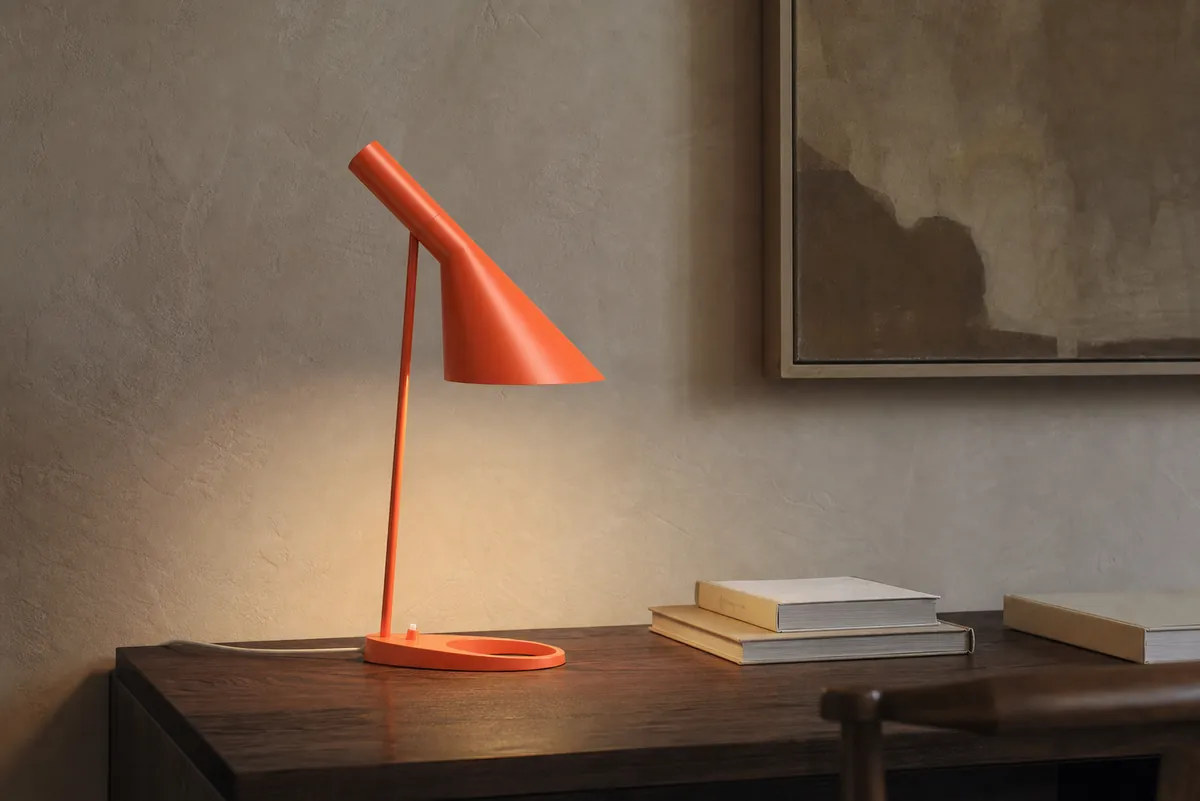
    Louis Poulsen AJ Table lamp in Electric Orange on a dark wooden desk
    The AJ Table in Electric Orange. Editorial image based on the lamp’s original form.

    Designed as part of a complete world

    Jacobsen designed the AJ family for Copenhagen’s SAS Royal Hotel, where architecture, furniture, textiles and lighting were conceived as a single environment. The lamp’s asymmetric shade directs light exactly where it is needed while shielding the eye from glare. That practical purpose is what gives the object its unmistakable expression.

    The shape looks effortless, but it is full of tension: a heavy oval base, a thin vertical stem and a shade that appears to lean forward with intent. Nothing is decorative in the usual sense. The character comes from proportion and direction.

    Why Electric Orange works

    In black or white, the AJ can behave almost like architectural hardware. Electric Orange changes the conversation. It makes the lamp visible even when switched off and brings warmth to stone, dark wood, old paintings and stacks of books.

    That is precisely why it works in an interior that mixes periods. The orange does not attempt to match the room. It gives the eye a point of focus and prevents a collection of serious design objects from becoming too polite.

    A good accent colour does not ask permission from the rest of the room.

    Light with boundaries

    The AJ is not designed to fill every corner with uniform brightness. It creates a controlled pool of light for reading, working or highlighting an object. The shade can be adjusted, turning illumination into something composed rather than merely available.

    This makes it especially effective in the evening. Instead of flattening the room with ceiling lights, one lamp produces contrast: a bright page, a glowing wall and shadows that allow materials to keep their depth.

    A design that still feels direct

    Many mid-century objects survive because nostalgia protects them. The AJ survives because it remains useful. Its form is graphic without becoming a logo, recognisable without becoming fragile, and expressive without demanding an empty gallery around it.

    Louis Poulsen still produces the AJ Table in several finishes, including Electric Orange. The continuing appeal is easy to understand: it solves a lighting problem and, almost as a side effect, gives the entire room more confidence.

    Product background and current specifications: Louis Poulsen AJ Table documentation.