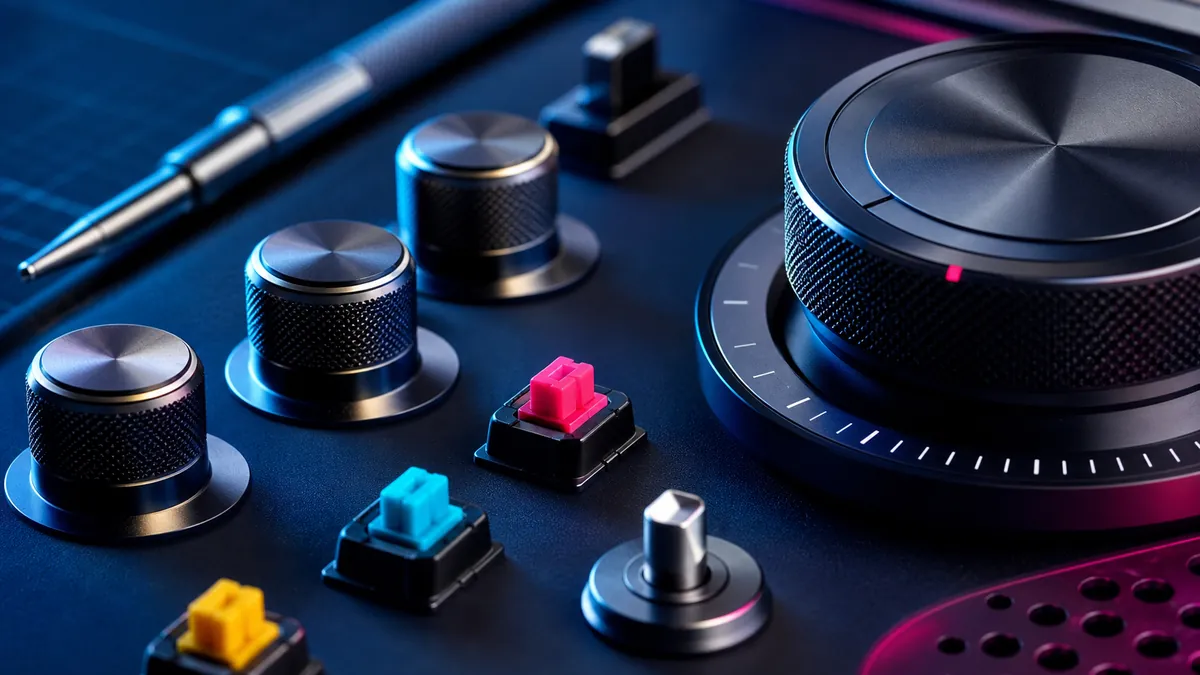
A touchscreen can become anything, which is precisely its problem. The same glass rectangle controls volume, temperature, navigation and settings, but it never tells your hand what it is before it lights up. Physical controls do. Shape, resistance and position turn interaction into memory.
Eyes belong elsewhere
A volume knob can be found and adjusted without interrupting a conversation. A tactile camera dial communicates its position before the shutter is pressed. Controls used while driving, cooking or listening should not demand visual confirmation for every small change.
Resistance communicates
The weight of a switch, the detents of a dial and the travel of a key all provide information. Good resistance prevents accidental input and makes an action feel deliberate. This is not nostalgia; it is a compact feedback system that requires no animation or notification sound.
Dedicated means dependable
A physical control usually does one thing, immediately. Software controls can move after an update, disappear behind a modal or become unavailable when the interface freezes. Dedicated controls are valuable for frequent actions because their location and purpose remain stable.
Hybrid is the answer
Not every function deserves its own button. Deep settings and infrequent options fit naturally on screens. The strongest products combine adaptable software with tactile controls for the actions people perform constantly: power, volume, playback, temperature and capture.
Design for the hand
Controls should be distinguishable by shape and spacing, not merely labels. Important actions need room around them. Similar buttons performing opposite functions should not be identical when they can be used without looking.
The future does not need to abandon screens. It needs to remember that people have hands—and that a satisfying click can be more informative than an entire interface.