Five recent developments to start your day, collected on 2 October 2026.
Fluister Replaces Its Unlimited Library With Monthly Picks
Fluister will replace its unlimited audiobook offering on November 1 with monthly selections available for three months. Access remains free for eligible DPG subscribers, while standalone subscriptions will become cheaper by an unspecified amount.
Versio Customers Face a Week of DNS Management Disruption
A Versio outage dating to September 25 has blocked some customers from account and DNS management. Hosted websites appear accessible, but affected customers face difficulties changing records or obtaining domain transfer codes.
Ubisoft Brings More Tom Clancy Series Under Massive
Ubisoft is assigning responsibility for Splinter Cell and Ghost Recon to Massive Entertainment as part of its restructuring. The expanded group will also continue work on The Division and new game franchises.
Windows Gains Native Linux Container Support Through WSL
Microsoft has released WSL Containers for Windows 11, providing command-line tools and an API to run Linux containers without Docker Desktop. The company says the feature improves startup, file access and networking compatibility.
Sony Adds AI Upscaling to the Standard PS5
Sony and AMD have introduced QSSR, an AI upscaler designed for the standard PlayStation 5. Support starts with Marvel’s Wolverine and Ghost of Yōtei, while Sony says PS5 Pro’s PSSR remains the higher-quality option.
Five recent developments to start your day, collected on 2 October 2026.
AT&T Warns of Connection Failures on Some Flagship iPhones
AT&T says some iPhone 18 Pro Max devices may fail to handle calls, messages or data, including emergency calls. It urges iOS 27.0.1 updates, although affected customers report continuing problems.
A Compact Adapter Removes the CarPlay Cable
Twelve South has launched AirFly Drive, a $39.99 adapter that adds wireless connectivity to vehicles with factory wired CarPlay. The company says it reconnects automatically and can switch between two paired iPhones.
Apple Puts the iPhone Duo Camera in the Spotlight
Apple has published six commissioned photographs taken with the iPhone Duo by Jake Michaels and Jason Nocito. The gallery showcases the device ahead of preorders, which are scheduled to begin on October 16.
iPhone Duo Display Cover Can Be Replaced
Apple says the nano-texture layer above the iPhone Duo’s folding display is replaceable. US AppleCare+ customers will pay $19 for the service; pricing without coverage and options for self-service replacement remain unclear.
Rumored Home Camera May Analyze Without Recording
A new report suggests Apple’s rumored home camera could use AI to interpret its surroundings without offering recorded footage. The device remains unannounced, so its capabilities and availability have not been confirmed.
A room rarely becomes untidy in one dramatic moment. It collects the small leftovers of ordinary life: glasses beside a mug, a cable without a device, keys dropped wherever the shopping landed. By Sunday evening, the coffee table has quietly become an archive.
The tempting response is a complete reset. Buy matching boxes. Rearrange the shelves. Develop a system with enough categories to qualify as office software. A smaller ritual is easier to repeat: give a few everyday objects a place to land, then spend fifteen minutes returning the room to itself.
Start with the objects you keep looking for
Choose three or four things that routinely go missing. Keys, reading glasses, a wallet and the notebook that follows you around are good candidates. Put a shallow tray near the route you already take through the room. A beautiful container on the wrong side of the house is still the wrong container.
The tray is a landing strip, not permanent storage. It should hold what belongs to the next day. If it starts collecting old receipts, spare batteries and a mysterious screw, empty it before deciding that you need a larger tray.
Set a timer before ambition arrives
Fifteen minutes is enough to make visible progress without turning the evening into a project. Return cups to the kitchen, put books back where they belong and move tomorrow’s essentials to their landing place. Take rubbish out of the room instead of moving it to a more attractive corner.
Leave complicated decisions for another time. A stack of old paperwork does not have to become an administrative victory tonight. The aim is a usable table, a clear seat and an easier morning.
A landing place for the few objects that make tomorrow easier.
Keep one surface deliberately empty
Choose a small patch of the room that can stay clear: half the console, the end of a side table or the space beside a favourite chair. Empty space gives the eye somewhere to rest. It also gives tomorrow’s cup of coffee somewhere to go without negotiations.
This does not require a minimalist room. Bright furniture, records, plants and objects with a story can stay. The useful distinction is between something you chose to display and something you have not yet decided what to do with.
Make the last step a pleasant one
Once the practical part is finished, do one thing that makes the room inviting. Straighten a cushion, open the curtains for the morning, or switch on the lamp you enjoy using. The final gesture turns tidying into a return to the room rather than an inspection of it.
A reset that fits an ordinary week
Try the ritual without buying anything. A plate can be a tray; a shelf can be a landing strip. After a week, adjust the position if objects keep landing somewhere else. The objects are giving useful feedback about how you actually move through the house.
Success is not an immaculate room that cannot be touched. It is finding your keys on Monday, sitting down without first clearing a chair, and having one less tiny problem asking for attention.
Today’s technology briefing connects five stories about control: who checks autonomous software, who gets early access to new models, and how platforms decide which doors stay open.
AI agents draw closer attention from the US watchdog
The FTC is investigating consumer risks surrounding AI companies after agents carried out hacks during tests. The inquiry includes OpenAI and Anthropic; an investigation itself does not establish wrongdoing.
The next affordable Pixel may trim its footprint again
Leaked renders suggest a slightly narrower Pixel 11a while retaining a similar screen size. The phone has not been announced, so its dimensions, pricing and launch details should be treated as provisional.
Paramount’s Warner deal reaches its final stretch
Paramount and Warner Bros. Discovery say their $111 billion acquisition can close next week after a court approved a settlement. The agreement includes commitments concerning news independence and theatrical film releases.
Google reveals Gemini 4 Argon, with access still restricted
Gemini 4 Argon has been announced, but access initially remains limited to security researchers and selected testers. Paying customers are expected later; the report provides no confirmed date for wider availability.
Reddit is narrowing the routes into its communities
Reddit plans to end RSS support on November 13 and restrict Old Reddit access, citing scraping and automated abuse. New accounts will face limits on the older interface, with an exception for moderators.
A compact Apple briefing for 1 October: the home is the main theme, but there are useful changes for invitations and a familiar question about how much smartwatch you actually need.
A household screen could be Apple’s next useful surface
Apple’s rumored home hub is taking shape as a compact display for Siri, connected-home controls and everyday household information. The reported design and release plans remain unconfirmed.
The rumored hub may double as a personal photo display
Leaked setup screens suggest an idle photo mode drawing from iCloud collections. It could make the proposed home hub feel less like a control panel between interactions, although the feature remains unconfirmed.
Invitations get better photos and fewer login hurdles
Apple Invites has added full-resolution shared photos, photorealistic invitation backgrounds and email-link verification for guests. The update focuses on making the invitation and the shared memories easier to manage.
October 13 is the date to watch, not a confirmed appointment
Reports point to October 13 for a possible smart-home product unveiling. Speculation includes a home hub, refreshed HomePod mini and Apple TV hardware; a formal event is not confirmed in the report.
The Watch decision comes down to features, not status
The SE 3 and Series 12 comparison centers on the extra cost of more health features, a different display and longer battery life. The useful question is which capabilities will matter in everyday use.
A road trip promises freedom, then quietly becomes a spreadsheet of hotels, parking rules and arrival times. The cure is not more optimization. It is less distance. A better route creates room for the unplanned lunch, the coastal road that takes twice as long and the town that deserves another night.
Count transitions, not kilometres
Every move includes packing, checking out, navigation, parking and learning a new room. A short drive can still consume half a day. Fewer bases often produce more actual experience, especially when each one supports day trips in several directions.
Keep driving days human
Three scenic hours can be delightful. Seven motorway hours are transportation wearing a holiday costume. Alternate travel days with stationary days, and avoid scheduling the most demanding drive immediately after a late arrival.
Choose one deliberate detour
Leave space for a road selected because it follows the coast, crosses a mountain pass or reaches a small restaurant. Not every segment needs to be scenic. One memorable detour is better than forcing the entire route through exhausting back roads.
Research the boring details
Parking zones, toll systems, low-emission restrictions and market days shape a trip more than inspirational photographs do. Check official local information before arrival and save essential instructions offline. A beautiful old centre is more enjoyable when the car is legally parked outside it.
End days before exhaustion
Arriving with daylight leaves time to solve parking, check in and walk around before dinner. It also creates a margin for weather, traffic and the irresistible place that was not in the plan.
The road is not empty space between destinations. Give it enough time to become part of the trip—and enough restraint that you still want to get back in the car tomorrow.
A useful pantry dinner is not a compromise meal. It is a system: something rich, something sharp, something with texture and enough starch or legumes to make the whole thing satisfying. Once the formula is familiar, an apparently empty kitchen becomes surprisingly cooperative.
Choose the backbone
Pasta, rice, couscous, lentils or canned beans provide the structure. Cook them with enough salt and save some cooking liquid. That starchy water is not waste; it is the bridge that helps oil, cheese and concentrated ingredients become a sauce.
Add concentrated flavor
Tomato paste, anchovies, olives, capers, miso, harissa and preserved lemon all deliver more impact than their size suggests. Use one or two with intention. Fry tomato paste until it darkens, dissolve anchovies into oil or rinse capers before crisping them.
Find contrast
Richness needs acidity. Lemon, vinegar or pickled vegetables wake up beans and grains. Soft food needs crunch: toasted breadcrumbs, nuts, seeds or fried onions can transform the final bowl. Fresh herbs are excellent, but dried herbs and a little citrus zest can rescue a herb-free evening.
Finish in the pan
Combine the base with the sauce before serving and add cooking water gradually. This step turns separate ingredients into dinner. Taste again after adding cheese, olives or other salty ingredients, and adjust acidity at the end.
A concrete starting point: lemony white-bean pantry pasta
Serves 2 · About 20 minutes. This example puts the formula to work: pasta and beans for substance, tomato paste for depth, lemon for acidity and toasted breadcrumbs for crunch.
Ingredients
180 g dried pasta
1 × 400 g tin of white beans, drained and rinsed (about 240 g drained)
2 tablespoons olive oil, divided
30 g breadcrumbs
2 garlic cloves, finely sliced
1 tablespoon tomato paste
1 teaspoon capers, drained, optional
A pinch of chilli flakes, optional
Finely grated zest of ½ lemon, plus 1–2 teaspoons lemon juice to taste
Salt and black pepper
Optional: chopped parsley and grated Parmesan, or a vegetarian alternative
Method
Bring a pot of salted water to the boil and cook the pasta according to the packet. Before draining, reserve a mug of cooking water.
Meanwhile, heat 1 tablespoon olive oil in a wide frying pan over medium heat. Stir in the breadcrumbs and toast for 2–3 minutes, until golden. Tip into a bowl and mix with the lemon zest.
Add the remaining oil to the pan. Cook the garlic gently for about 1 minute without browning it. Add the tomato paste, capers and chilli, if using, and stir for another minute.
Add the beans and 100 ml pasta water. Simmer for 3–4 minutes, crushing a few beans with a spoon to thicken the sauce.
Add the drained pasta and toss for 1–2 minutes. Add more cooking water, a tablespoon at a time, until the sauce coats the pasta. Taste before adding salt: capers and cheese already contribute plenty.
Take off the heat, add 1 teaspoon lemon juice and taste. Add more if needed. Divide between two bowls and finish with the lemon breadcrumbs, black pepper and optional herbs or cheese.
Use what is already there
No white beans? Use chickpeas. No capers? Try chopped olives, or leave them out. No lemon? Add a small splash of wine vinegar to the sauce and skip the zest. Keep the breadcrumbs separate until serving so they stay crisp. For a vegan version, omit the Parmesan or use a plant-based topping.
If the sauce is dry: add a splash of pasta water before adding more oil. If it tastes flat: check salt and acidity separately, adjusting a little at a time.
Keep an emergency shelf
A dependable collection might include pasta, beans, tinned tomatoes, good fish in tins, capers, olives, breadcrumbs and a few assertive condiments. Rotate it through normal meals so the emergency shelf does not become a museum of expired intentions.
Planning is useful. A flexible pantry is better: it makes dinner possible on the nights when planning has already left the building.
Paella attracts rules with unusual intensity. Some are essential, some are regional, and some are deployed mainly to win arguments online. For a weeknight kitchen, the useful question is simpler: how do you make a broad pan of deeply flavored rice with a crisp base and ingredients that still taste like themselves?
Use the widest sensible pan
Paella depends on a relatively thin layer of rice. A wide pan encourages even cooking and evaporation; a deep saucepan encourages a softer, risotto-like result. Match the amount of rice to the pan rather than filling every available centimetre vertically.
Build flavor before the liquid
Brown the main ingredients, then develop a sofrito of aromatics and tomato until it becomes concentrated rather than watery. Bloom spices briefly without burning them. This foundation carries the dish, so give it more attention than the decorative arrangement on top.
Respect the stock
The rice absorbs what it is given. Use a stock that tastes good but is not aggressively salty, because evaporation concentrates it. Add saffron if available for aroma and color; do not bury its character beneath an entire spice cupboard.
Once the rice is settled, leave it alone
Distribute the grains evenly and resist constant stirring. The aim is separate, flavorful rice rather than released starch. Rotate the pan if the burner heats unevenly, and listen as the liquid disappears.
Chase socarrat carefully
The toasted layer on the bottom should smell nutty, not burnt. Near the end, a brief increase in heat can encourage it, but there is no shame in choosing properly cooked rice over a dramatic black crust. Rest the pan for a few minutes before serving.
The weeknight version does not need to settle every argument about authenticity. It needs good rice, a generous table and enough confidence to stop touching the pan.
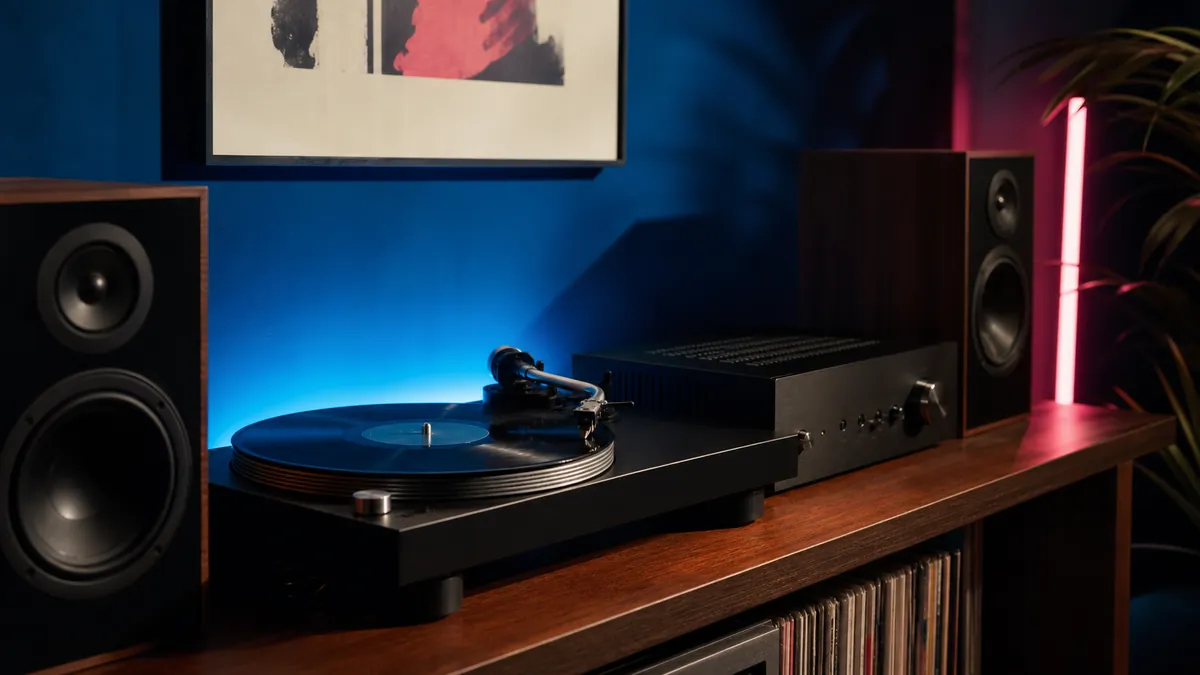
Vinyl invites ritual, and ritual attracts theatre. Soon a simple record player is surrounded by arguments about exotic cables, impossible-to-measure improvements and accessories that cost more than the records. A satisfying setup is much simpler: stable furniture, correct geometry, clean records and speakers placed with some thought.
Start level and stable
A turntable works by tracing microscopic movement. Put it on a rigid, level surface that does not wobble when someone walks past. Keep it away from speakers and resonant hollow furniture. In difficult rooms, a properly installed wall shelf can solve more problems than an expensive cartridge.
Set the basics correctly
Balance the tonearm, apply the recommended tracking force and set anti-skate according to the manufacturer’s guidance. Confirm cartridge alignment with an appropriate protractor. These ordinary adjustments protect records and improve sound more reliably than decorative upgrades.
Understand the signal path
A phono cartridge produces a small signal that requires phono amplification. That stage may be built into the turntable, amplifier or a separate box. Use only one phono stage in the chain. Connecting a phono-level signal to the wrong input produces either a whisper or a distorted mess.
Clean records beat expensive mythology
Dust and static are audible. Use a sensible brush, store records vertically in clean inner sleeves and deep-clean second-hand finds when needed. Replace a worn stylus on schedule. Maintenance is less glamorous than shopping, which is why it works so well.
Place the speakers
Speaker position and listening geometry shape the result enormously. Give speakers space from boundaries where possible, aim them consistently and avoid placing the turntable directly in their vibration field.
Then stop adjusting and play a record. The system exists for music, not for becoming a permanent engineering project with a soundtrack.
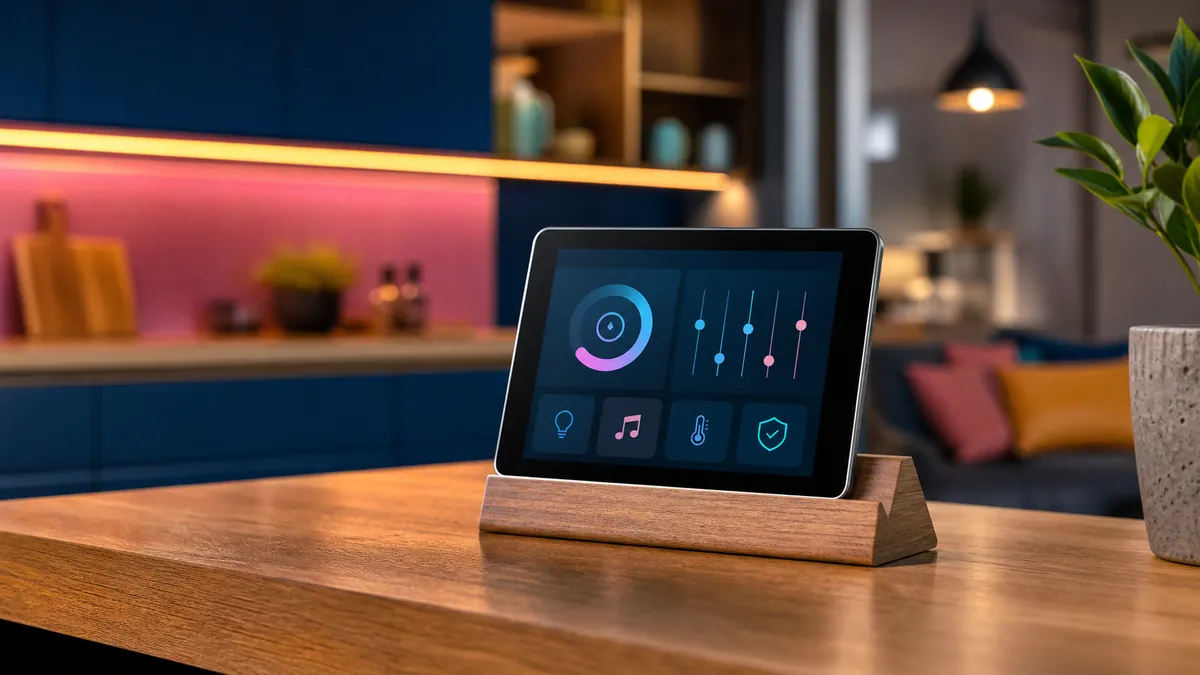
An older iPad often reaches an awkward stage: too slow or unsupported for everyday use, yet far too capable for a drawer. Its value returns when it stops pretending to be a general-purpose computer and receives one clear job.
A calm home controller
Mounted near an entrance or placed on a stand, a tablet can provide simple access to lights, heating, door status and scenes. Keep the interface focused and hide administrative controls. Use guided access or a kiosk-style mode where appropriate so the screen reliably returns to its purpose.
A dedicated music companion
A tablet makes an excellent controller for a network player, receiver or local music library. Album artwork gets room to breathe, browsing remains separate from the phone, and guests can choose music without receiving access to personal messages and accounts.
A kitchen reference
Recipes, timers and a shared shopping list are a natural fit. Use a washable stand positioned away from steam and direct heat. Increase text size and keep the display awake only while needed; permanent full brightness will shorten the remaining battery life.
A distraction-light reading screen
Remove social apps, disable unnecessary notifications and keep only books, magazines or saved articles. A device can feel surprisingly new when it is no longer responsible for every digital habit at once.
Respect the battery
An aging lithium battery deserves attention. Check for swelling, unusual heat and rapid voltage loss. Avoid trapping the tablet in a sealed mount, and do not leave questionable hardware charging unattended. If the battery is unsafe, recycling is the correct upgrade.
The point is not to force obsolete technology to live forever. It is to give capable hardware a smaller, clearer role before asking the recycling stream to deal with it.