The northern coast of Spain does not reveal itself all at once. It arrives in fragments: a flash of Atlantic blue between eucalyptus trees, a stone harbour at the bottom of a hill, the smell of woodsmoke outside a roadside bar. The quickest route west is perfectly competent. The coastal route is much better.
This journey begins in Bilbao and follows the Bay of Biscay through Cantabria and Asturias. There is no strict checklist. The idea is to keep the ocean on the right, choose the smaller road whenever it looks interesting and stop before the scenery becomes background noise.
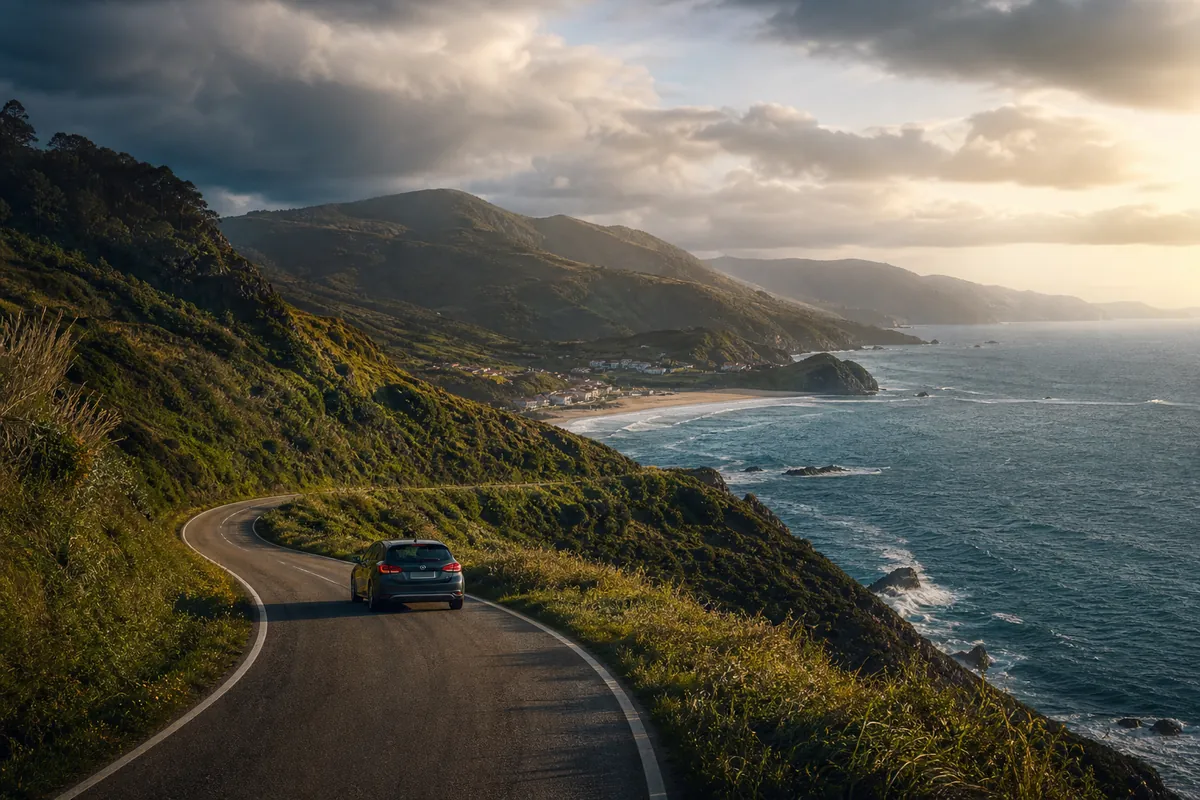
Bilbao in the rear-view mirror
Bilbao is a difficult city to leave early. There is always another coffee, another pintxo and another building that deserves a detour. But once the city loosens its grip, the landscape changes quickly. Industry gives way to steep green slopes and glimpses of water. The motorway offers speed; the old coast road offers a story.
The first useful rule of this trip is simple: do not measure progress in kilometres. A short distance can contain a fishing port, a cliff walk, two plates of anchovies and an unexpectedly serious conversation about cider. This is not inefficiency. This is the entire point.
Castro Urdiales: the first taste of the coast
Castro Urdiales feels like a transition between urban northern Spain and the wilder coast ahead. Its medieval church stands above a harbour filled with working boats and weekend walkers. The promenade is polished, but the smell of salt and diesel keeps it honest.
It is an ideal first stop: long enough to stretch the legs, short enough not to destroy the day. Walk around the old harbour, order something from the sea and resist the urge to convert the journey into an optimised spreadsheet.
The best road trips leave enough empty space for a place you did not know you needed.
West through Cantabria
Beyond Castro Urdiales, the road begins its rhythm of green headland, pale beach and compact town. San Vicente de la Barquera appears almost theatrically, with water on both sides and mountains rising behind it. On a clear day the Picos de Europa hover in the distance like scenery borrowed from another trip.
Lunch is best kept uncomplicated: grilled fish, tortilla, bread and a cold drink. Northern Spain rewards appetite but punishes over-planning. Choose the busy room, order what seems to be moving fastest from kitchen to table and save the research for later.
Llanes after the day-trippers leave
Llanes is the kind of place that changes character by the hour. During the day, the harbour and old town are animated. Toward evening, the streets empty, shutters close and the sea becomes louder. Above town, the Paseo de San Pedro runs along a grassy cliff with views that make every phone camera look briefly competent.
The harbour wall is protected by the Cubes of Memory, giant concrete blocks transformed into bright geometric art. They are playful, slightly strange and completely at home against the grey Atlantic. It is a good reminder that coastal towns do not have to choose between tradition and personality.
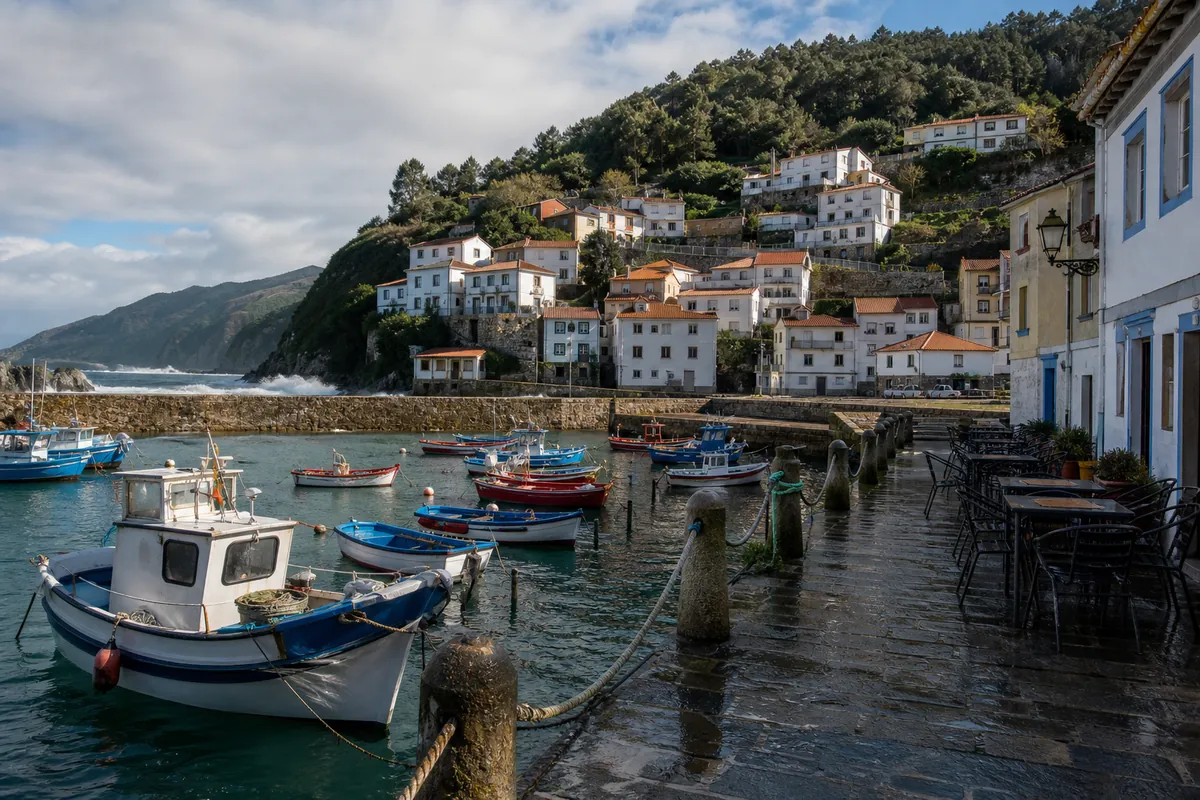
The smaller road into Asturias
Asturias announces itself through scale. The cliffs feel taller, the beaches more hidden and the valleys more intensely green. The main road is excellent, but the memorable sections are the exits that drop toward villages whose names were never part of the plan.
Ribadesella offers a broad estuary and elegant seaside houses. Cudillero is a cascade of colour around a tiny amphitheatre-shaped harbour. Luarca spreads across two hills, joined by bridges and watched over by a white cemetery high above the sea. Each place could absorb a day; on a road trip, each becomes a vivid chapter.
A quiet base in the west
Eventually, constant movement loses its charm. A small apartment-style hotel in western Asturias makes a useful base: enough room to unpack, a table for maps and snacks, and a window that turns rainfall into atmosphere rather than inconvenience.
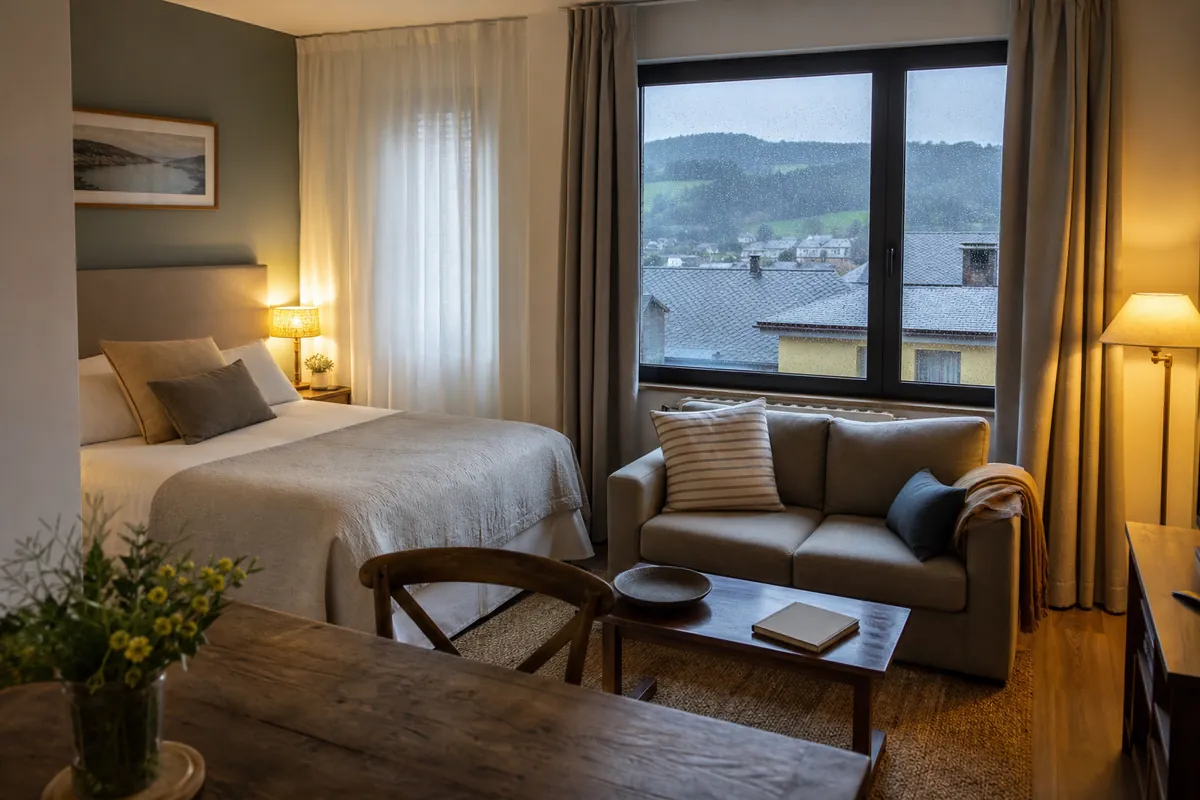
The pleasure of staying put is that the surrounding coast can be explored without luggage or deadlines. Puerto de Vega is close enough for a morning wander around the harbour. Luarca works for lunch and a long walk. The Senda Costera Naviega offers the purest version of the landscape: cliffs, fields, beaches and the Atlantic repeatedly disappearing and returning.
What the road teaches you
There are more spectacular drives in Europe and more famous coastal cities. What makes northern Spain special is the density of small rewards. A dramatic view rarely needs a ticket. A memorable meal may arrive in a room with fluorescent lighting. The hotel that feels best is often the one that lets wet coats dry and provides a proper table for tomorrow’s plan.
The weather is part of the composition. Rain sharpens the slate roofs. Cloud gives the green landscape depth. When the sun breaks through, the entire coast seems to switch on at once.
A deliberately incomplete itinerary
- Begin in Bilbao, but leave enough daylight for the road.
- Pause in Castro Urdiales for the harbour and old quarter.
- Choose one Cantabrian stop rather than collecting them all.
- Walk above Llanes before dinner.
- Let Asturias slow the journey down with harbour towns and cliff paths.
- Stay somewhere practical and warm, then explore without luggage.
This is not a route to complete. It is a route to interrupt. Take the exit, order the local thing, walk until the weather changes and keep the Atlantic close. The long way west is not the detour. It is the destination.
All photographs in this story are original editorial illustrations created for CloudOnFire. They evoke the journey without depicting a specific booking, property or private traveller.
Leave a Reply