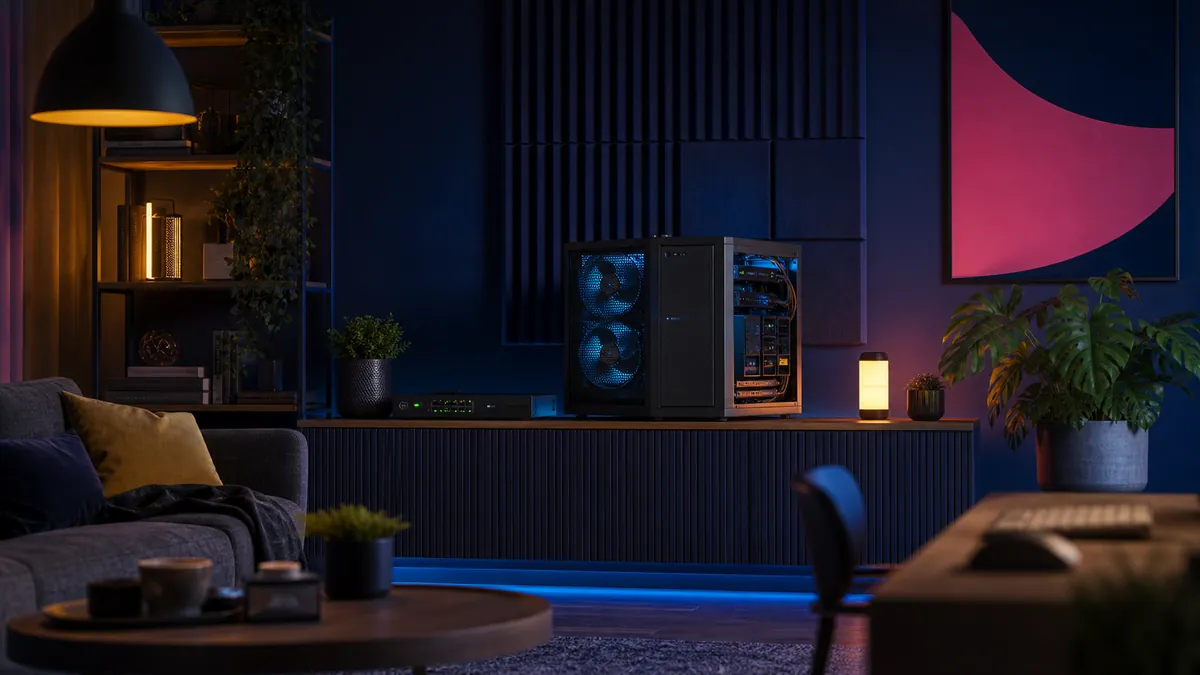
A homelab can be technically brilliant and still be a terrible housemate. The familiar recipe—retired enterprise hardware, too many tiny fans and a rack placed wherever it fits—often creates a machine room in a place that was supposed to feel like home. The better goal is not silence at any cost. It is useful performance without a permanent jet-engine soundtrack.
Begin with the work, not the rack
Before buying quieter fans, list what the lab actually does. A few containers, Home Assistant, DNS, backups and a media server rarely need a dual-socket enterprise machine idling all day. Measure CPU use, memory pressure, storage activity and peak demand for a week. Downsizing an underused host can remove more heat and noise than any acoustic treatment.
Large fans win
Small fans have to spin quickly to move air. Larger fans can move the same volume more slowly and with a less irritating sound profile. Use unobstructed airflow, clean filters and sensible fan curves. Avoid forcing air through an unnecessary maze of drive cages and cables. A simple front-to-back path usually works better than a collection of heroic high-speed fans.
Storage changes the character
Hard drives produce more than airborne noise. Their vibration travels through shelves, floors and furniture. Rubber isolation helps, but placement matters more. Keep spinning disks away from hollow cabinets and shared walls. SSDs are ideal for active services; larger disks can remain for backups and bulk media where their activity is less constant.
Temperature is a budget
Chasing the lowest possible temperature creates noise without necessarily improving reliability. Modern hardware is designed to operate safely across a broad range. Set realistic temperature targets, monitor them and let fans respond gradually. Sudden fan ramps are often more distracting than a steady low hum.
Design for maintenance
A quiet system becomes loud again when filters clog or a fan starts failing. Leave enough space to clean it, label airflow direction and log temperatures. Keep one known-good replacement fan on hand. Quietness is not a one-time modification; it is part of operating the lab.
The nicest homelab is the one you can forget is running. It should make the house smarter, safer and more useful—without constantly announcing its presence.
Leave a Reply