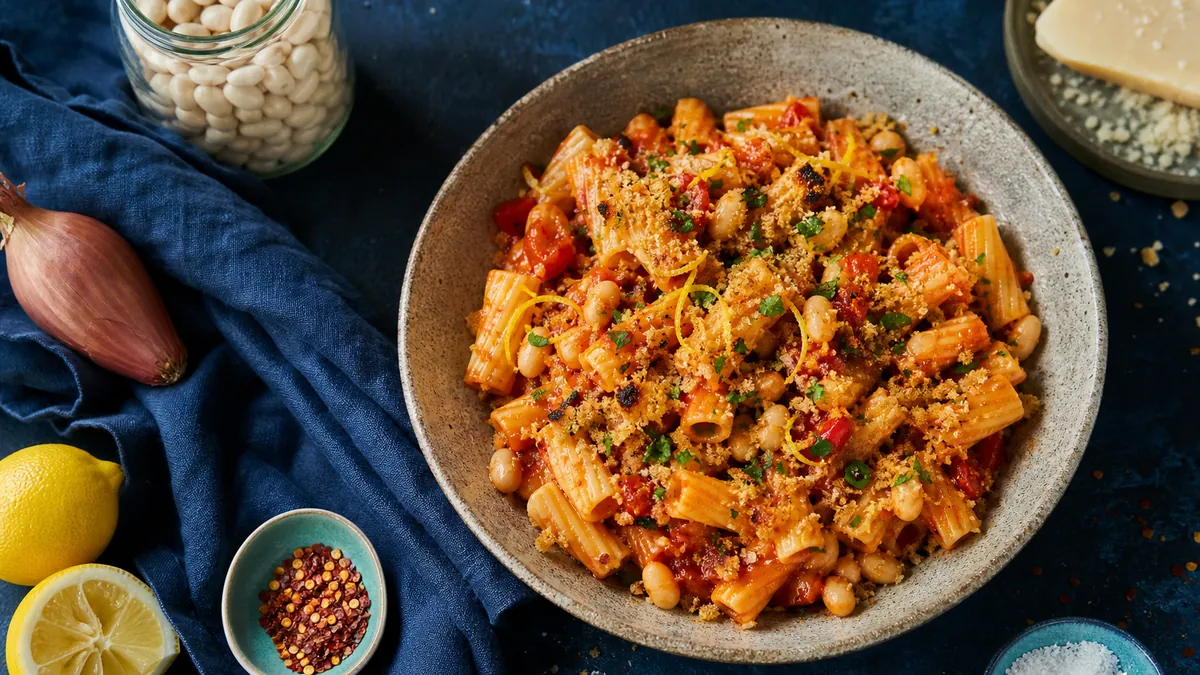
A useful pantry dinner is not a compromise meal. It is a system: something rich, something sharp, something with texture and enough starch or legumes to make the whole thing satisfying. Once the formula is familiar, an apparently empty kitchen becomes surprisingly cooperative.
Choose the backbone
Pasta, rice, couscous, lentils or canned beans provide the structure. Cook them with enough salt and save some cooking liquid. That starchy water is not waste; it is the bridge that helps oil, cheese and concentrated ingredients become a sauce.
Add concentrated flavor
Tomato paste, anchovies, olives, capers, miso, harissa and preserved lemon all deliver more impact than their size suggests. Use one or two with intention. Fry tomato paste until it darkens, dissolve anchovies into oil or rinse capers before crisping them.
Find contrast
Richness needs acidity. Lemon, vinegar or pickled vegetables wake up beans and grains. Soft food needs crunch: toasted breadcrumbs, nuts, seeds or fried onions can transform the final bowl. Fresh herbs are excellent, but dried herbs and a little citrus zest can rescue a herb-free evening.
Finish in the pan
Combine the base with the sauce before serving and add cooking water gradually. This step turns separate ingredients into dinner. Taste again after adding cheese, olives or other salty ingredients, and adjust acidity at the end.
A concrete starting point: lemony white-bean pantry pasta
Serves 2 · About 20 minutes. This example puts the formula to work: pasta and beans for substance, tomato paste for depth, lemon for acidity and toasted breadcrumbs for crunch.
Ingredients
- 180 g dried pasta
- 1 × 400 g tin of white beans, drained and rinsed (about 240 g drained)
- 2 tablespoons olive oil, divided
- 30 g breadcrumbs
- 2 garlic cloves, finely sliced
- 1 tablespoon tomato paste
- 1 teaspoon capers, drained, optional
- A pinch of chilli flakes, optional
- Finely grated zest of ½ lemon, plus 1–2 teaspoons lemon juice to taste
- Salt and black pepper
- Optional: chopped parsley and grated Parmesan, or a vegetarian alternative
Method
- Bring a pot of salted water to the boil and cook the pasta according to the packet. Before draining, reserve a mug of cooking water.
- Meanwhile, heat 1 tablespoon olive oil in a wide frying pan over medium heat. Stir in the breadcrumbs and toast for 2–3 minutes, until golden. Tip into a bowl and mix with the lemon zest.
- Add the remaining oil to the pan. Cook the garlic gently for about 1 minute without browning it. Add the tomato paste, capers and chilli, if using, and stir for another minute.
- Add the beans and 100 ml pasta water. Simmer for 3–4 minutes, crushing a few beans with a spoon to thicken the sauce.
- Add the drained pasta and toss for 1–2 minutes. Add more cooking water, a tablespoon at a time, until the sauce coats the pasta. Taste before adding salt: capers and cheese already contribute plenty.
- Take off the heat, add 1 teaspoon lemon juice and taste. Add more if needed. Divide between two bowls and finish with the lemon breadcrumbs, black pepper and optional herbs or cheese.
Use what is already there
No white beans? Use chickpeas. No capers? Try chopped olives, or leave them out. No lemon? Add a small splash of wine vinegar to the sauce and skip the zest. Keep the breadcrumbs separate until serving so they stay crisp. For a vegan version, omit the Parmesan or use a plant-based topping.
If the sauce is dry: add a splash of pasta water before adding more oil. If it tastes flat: check salt and acidity separately, adjusting a little at a time.
Keep an emergency shelf
A dependable collection might include pasta, beans, tinned tomatoes, good fish in tins, capers, olives, breadcrumbs and a few assertive condiments. Rotate it through normal meals so the emergency shelf does not become a museum of expired intentions.
Planning is useful. A flexible pantry is better: it makes dinner possible on the nights when planning has already left the building.
Leave a Reply